


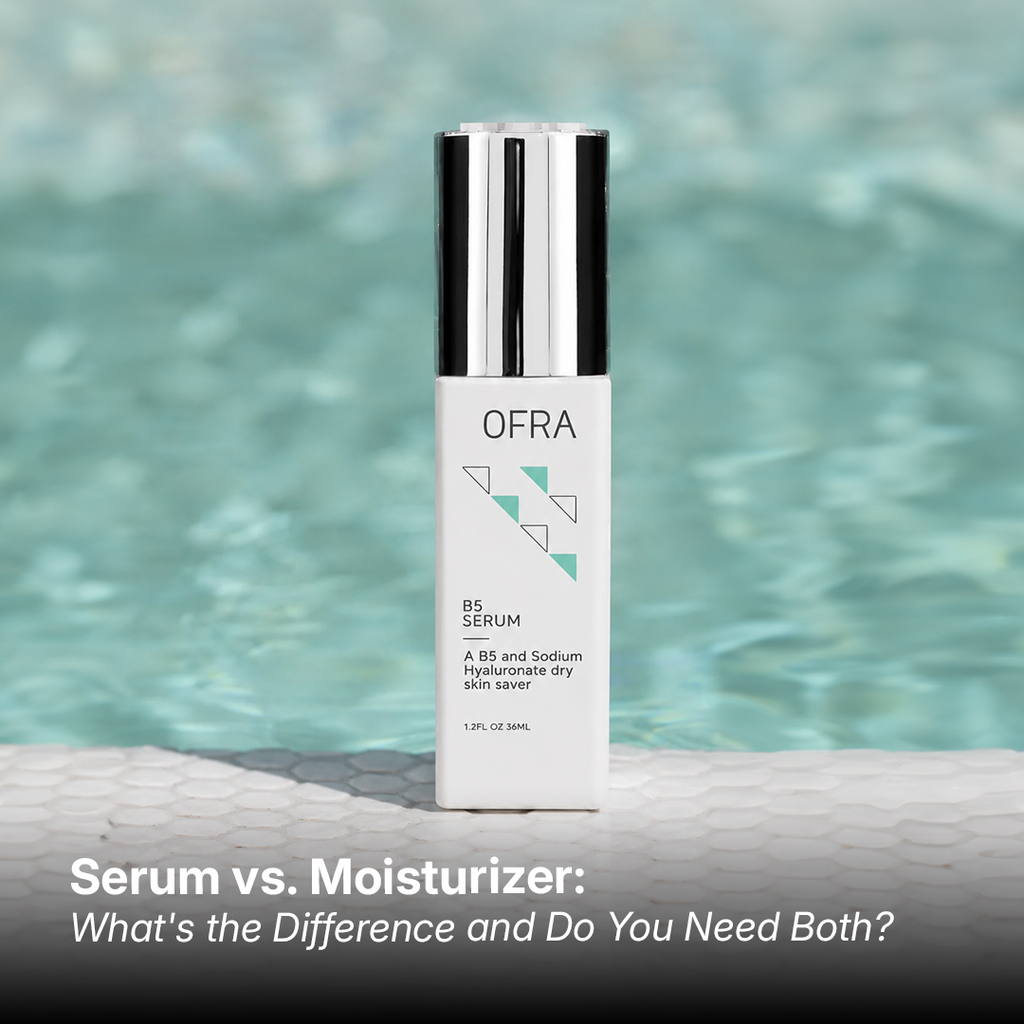
When building a skincare routine, one of the most common questions is whether you need a serum, a moisturizer, or both. While they may seem similar, these two skincare staples serve different purposes and work together to help your skin look and feel its best.
Understanding the difference between a serum and a moisturizer can help you choose the right products for your skin type and skincare goals.
What Is a Serum?

A serum is a lightweight skincare product designed to deliver concentrated ingredients directly to the skin. Serums are formulated with smaller molecules that penetrate deeper into the skin's surface, helping target specific concerns such as dryness, dullness, fine lines, uneven texture, or loss of firmness.
Because serums are highly concentrated, a little goes a long way.
Benefits of Using a Serum
-
Delivers potent active ingredients to the skin
-
Targets specific skin concerns
-
Lightweight and fast-absorbing
-
Layers easily under other skincare products
For example, vitamin C serums can help brighten the complexion, while peptide-based serums support smoother, firmer-looking skin.
What Is a Moisturizer?

A moisturizer is designed to hydrate the skin and help lock in moisture. Unlike serums, moisturizers create a protective barrier on the skin's surface that helps prevent water loss throughout the day.
Moisturizers typically contain ingredients that soften, smooth, and nourish the skin while supporting a healthy skin barrier.
Benefits of Using a Moisturizer
-
Provides long-lasting hydration
-
Helps strengthen the skin barrier
-
Locks in the benefits of your skincare routine
-
Leaves skin feeling soft and comfortable
Whether you have dry, oily, combination, or sensitive skin, moisturizer is an essential step in maintaining balanced, healthy-looking skin.
Serum vs. Moisturizer: Key Differences
|
Serum |
Moisturizer |
|
Lightweight texture |
Richer texture |
|
Contains concentrated active ingredients |
Focuses on hydration and moisture retention |
|
Targets specific skin concerns |
Supports and protects the skin barrier |
|
Applied before moisturizer |
Applied after serum |
Think of a serum as the treatment step and a moisturizer as the protective step. Each plays an important role in a complete skincare routine.
Do You Need Both?
For most skin types, yes.
Serums and moisturizers work best when used together. A serum delivers targeted ingredients to address your skincare concerns, while a moisturizer helps seal in hydration and maximize the benefits of those ingredients.
Using both can help create a more balanced and effective skincare routine.
How to Apply Serum and Moisturizer
Follow this simple order:
-
Cleanse your skin.
-
Apply toner if desired.
-
Apply your serum.
-
Allow it to absorb for a minute.
-
Follow with moisturizer.
-
Finish with SPF during the daytime.
Layering products in this order ensures your skin receives the full benefits of each step.
Our Skincare Favorites
Looking to upgrade your routine? Start with a targeted serum such as the Peptide Silk-C Serum or Vitamin A & C Serum to address specific skincare concerns. Follow with a nourishing moisturizer like the Peptide Moisturizer or Vitamin C Cream to help keep skin hydrated and glowing.
The Bottom Line
When it comes to serum vs. moisturizer, it isn't a matter of choosing one over the other. Serums and moisturizers serve different purposes and work together to support healthy, radiant-looking skin.
If you're looking to achieve smoother, more hydrated, and glowing skin, incorporating both products into your daily routine can make all the difference.